Veruca Salt: The Epitome of Entitlement in Willy Wonka's Factory
In the vibrant, candy-coated world of Willy Wonka's Chocolate Factory, where dreams are spun from sugar and imagination flows like a river of chocolate, there are characters who embody the very best and worst of human nature. Among the latter, one figure stands out with unparalleled notoriety: Veruca Salt. A name synonymous with insatiable greed, demanding behavior, and an utter lack of self-control, Veruca Salt Willy Wonka is arguably the most memorable and iconic spoiled brat in literary and cinematic history. Her character serves as a stark, often hilarious, but ultimately profound cautionary tale, cementing her place as a cultural touchstone.
From the moment she bursts onto the scene, clutching her coveted Golden Ticket, Veruca Salt is a whirlwind of "I want it now!" pronouncements. Her journey through Wonka's fantastical factory is not just a tour; it's a meticulously crafted narrative designed to expose and, ultimately, chastise the very excesses she represents. This article delves into the making of this unforgettable character, her infamous downfall, and the enduring legacy she leaves behind, prompting us to reflect on the pitfalls of unchecked materialism and the importance of gratitude.
The Origin Story of a Demanding Daughter: Who is Veruca Salt?
Veruca Salt's narrative is not born from a desire for wonder or adventure, but from a relentless, self-serving quest for acquisition. She is introduced as one of the five lucky children who find a Golden Ticket, granting them access to Willy Wonka's mysterious and magical chocolate factory. Unlike Charlie Bucket, whose ticket is a miracle of serendipity and hope, Veruca's ticket is a testament to the sheer power of wealth and persistence – albeit misguided persistence.
A Portrait of Privilege and Parental Indulgence
The defining characteristic of Veruca Salt is her upbringing. She hails from an exceedingly wealthy family, with a father, Mr. Salt, who owns a peanut shelling factory. Her parents, particularly her father, are depicted as enablers of the highest order, bending to her every whim without question. When Veruca declares she "wants a Golden Ticket," her father mobilizes his entire factory, diverting his employees from shelling peanuts to unwrapping thousands upon thousands of Wonka Bars. This monumental, if absurd, effort highlights the extreme lengths to which her parents will go to satisfy her demands, reinforcing her belief that anything she desires is hers for the taking. This sets the stage for the chaotic encounter between Veruca Salt Willy Wonka, where her sense of entitlement clashes with Wonka's whimsical rules.
Throughout the factory tour, Veruca's personality shines (or rather, glares) in full force. She constantly interrupts Wonka, demanding that items she sees, from the enormous edible toadstools to the miraculous Everlasting Gobstopper, be given to her immediately. Her pronouncements, often delivered with a sneer or a foot stomp, include memorable lines like, "I want a squirrel!" or "I want a trained squirrel!" Her lack of patience, coupled with a complete disregard for others' feelings or property, paints a vivid picture of a child utterly unchecked by discipline or empathy. She embodies the ultimate "gimme" culture, expecting the world to cater to her desires without question or consequence.
The Unforgettable Downfall: Veruca's Iconic Exit
While her demanding nature is consistent throughout the tour, it's in the Nut Room where Veruca Salt meets her spectacularly fitting demise. This scene, particularly in the 1971 film, is etched into the memories of generations, serving as the ultimate payoff for her outrageous behavior.
The Nut Room Incident and its Consequences
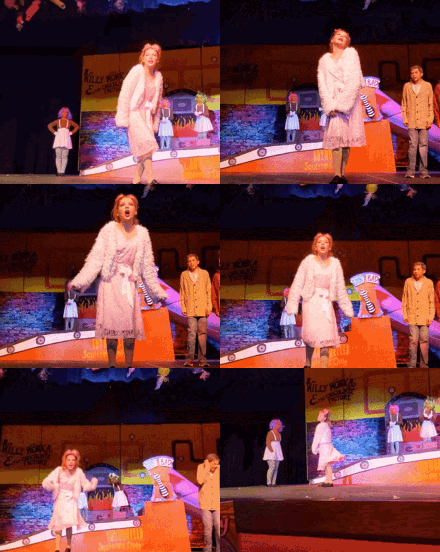
In the Nut Room, Wonka showcases his army of highly trained squirrels, capable of shelling nuts with incredible precision. Naturally, Veruca immediately declares, "I want one!" When Wonka politely refuses, explaining that they are not for sale and are too valuable for her to simply take home, Veruca throws a monumental tantrum. Ignoring her father's feeble attempts to intervene and Wonka's warnings, she storms into the room, intent on grabbing a squirrel for herself. The squirrels, however, are not easily dominated. They surround her, tap her head to determine if she's a "bad nut" (unfit for consumption), and upon confirming her rottenness, drag her to the rubbish chute. With a final, echoing scream, Veruca Salt tumbles down the chute, presumably destined for the factory incinerator. This dramatic sequence is perfectly encapsulated in the famous song, "Veruca Salt's Unforgettable Exit in Willy Wonka," which vividly details her descent and the metaphorical justice it represents.
Her father, rushing to her aid, also falls victim to the squirrels and joins her down the chute, a poetic justice for his enabling behavior. This iconic scene is not merely a moment of dark humor; it's a powerful allegorical punishment. Veruca, who views everything as disposable and herself as deserving of the best, is herself discarded as a "bad nut," unfit for Wonka's wondrous world. Her materialistic desires literally lead to her being treated as refuse, a stark consequence for her boundless greed and lack of respect.
Veruca Salt's Enduring Legacy in Pop Culture
Decades after her creation by Roald Dahl and her memorable portrayal on screen, Veruca Salt continues to resonate deeply within popular culture. She is far more than just a character; she's an archetype, a shorthand for a certain kind of entitled, demanding behavior.
A Cautionary Tale for All Ages
Veruca Salt remains a potent cautionary tale for both children and adults. For children, she demonstrates the unpleasant and isolating effects of selfishness and demanding behavior. Her ultimate fate serves as a clear illustration that such actions have consequences, and that a lack of gratitude can lead to losing everything. For adults, she prompts reflection on modern consumerism, the pressures of parenting, and the potential pitfalls of over-indulgence. Parents often invoke her name when discussing spoiled behavior, using her as a reference point for what they hope to avoid in their own children.
Her character transcends the boundaries of the book and films, permeating everyday language and media. People might say someone is "being a Veruca Salt" to describe an unreasonable or demanding person. The American alternative rock band even named themselves "Veruca Salt" in 1993, highlighting her iconic status and the character's association with a certain brashness and intensity. Both Julie Dawn Cole's portrayal in the 1971 film and Julia Winter's interpretation in the 2005 adaptation successfully capture the core essence of her demanding nature, ensuring her legacy continues across generations. To further understand her multifaceted impact, it's worth exploring broader analyses, such as those found in Decoding Veruca Salt: A Willy Wonka Character Study.
What We Can Learn from Veruca: Practical Insights
While Veruca Salt is a fictional character, the lessons embedded in her story are undeniably real and offer practical insights for navigating personal and societal challenges:
- For Parents and Educators:
- Teach Gratitude: Encourage children to appreciate what they have rather than constantly focusing on what they lack. Simple exercises like gratitude journals or discussions about privileges can make a big difference.
- Set Boundaries: It's crucial to say "no" and stick to it. While it might be difficult in the short term, consistent boundaries teach children resilience and respect for limits.
- Emphasize Earning, Not Entitlement: Help children understand the value of hard work and that not everything can be instantly acquired. Delayed gratification is a vital life skill.
- Model Empathy: Teach children to consider the feelings and needs of others, fostering a sense of community over pure self-interest.
- For Ourselves:
- Reflect on Wants vs. Needs: Periodically assess your own desires. Are they genuine needs, or are they fleeting wants driven by external pressures or a sense of entitlement?
- Practice Self-Control: The ability to defer gratification and manage impulses is beneficial in all areas of life, from financial decisions to personal relationships.
- Cultivate Contentment: Finding satisfaction in what you have, rather than constantly striving for more, can lead to greater happiness and reduced stress.
In conclusion, Veruca Salt is far more than just a character in a children's story; she is a cultural phenomenon and a timeless symbol. Her story vividly illustrates the perils of unchecked greed, the damaging effects of parental indulgence, and the ultimate, often comical, consequences of believing the world owes you everything. The tale of Veruca Salt Willy Wonka endures because its lessons are universal, reminding us all of the importance of humility, gratitude, and the understanding that true value lies not in what we demand, but in what we appreciate and earn.